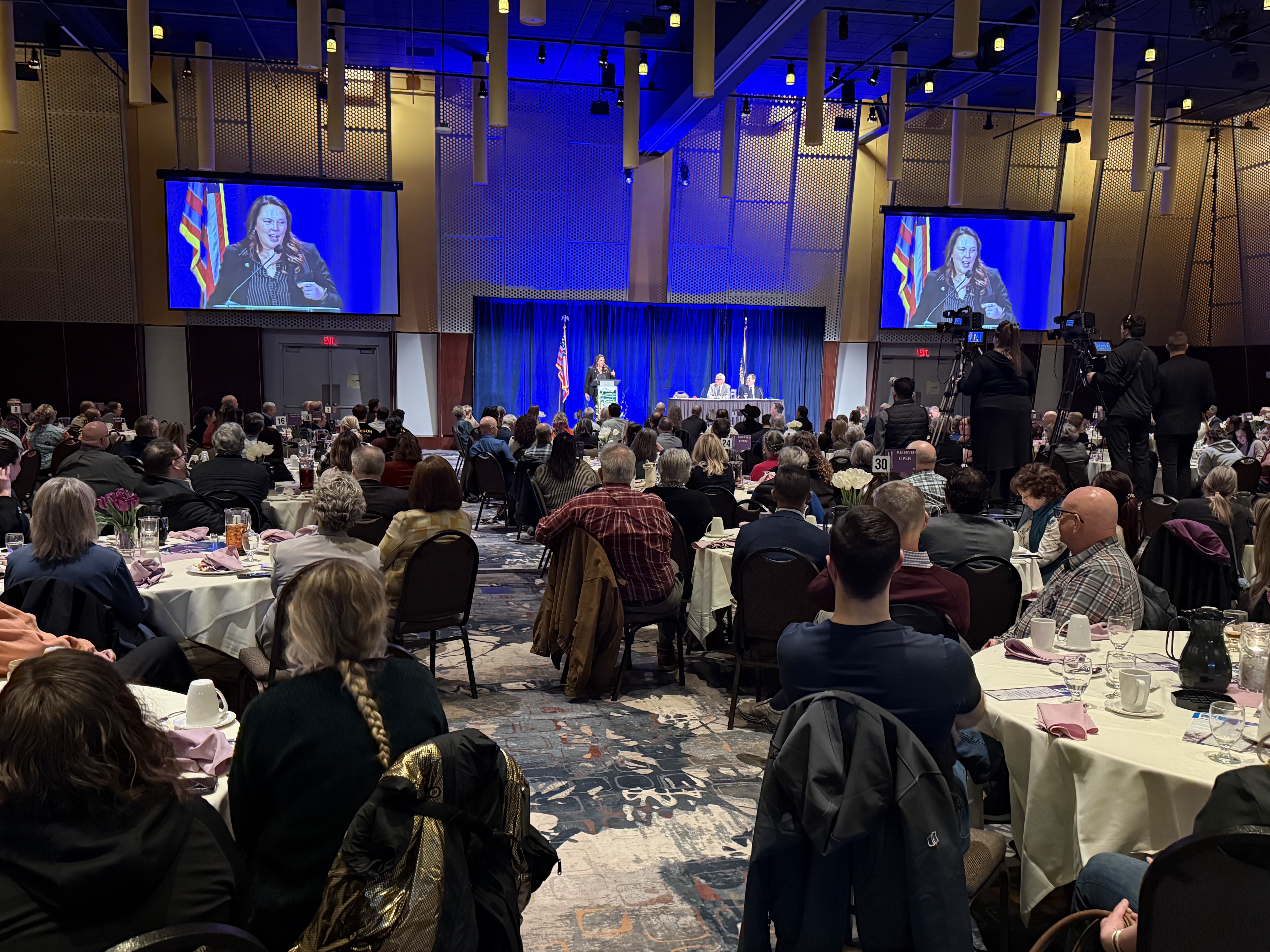

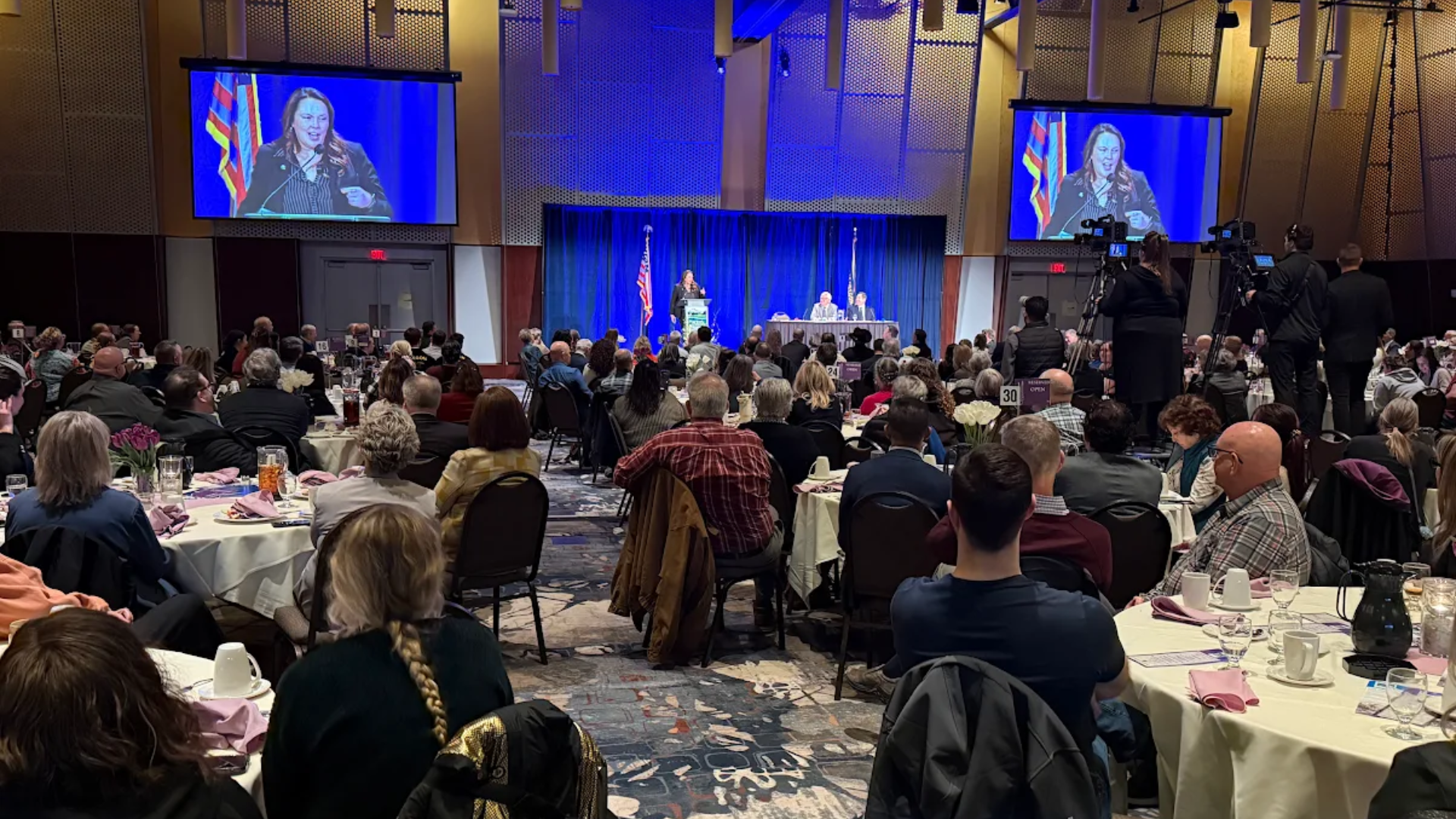
Marion County commissioners used their annual state of the county address to argue that local government is expanding behavioral health services, housing partnerships and infrastructure projects, even as state policy gaps continue to complicate that work.
Speaking at the annual luncheon, Commissioners Danielle Bethell, Kevin Cameron and Colm Willis each emphasized different priorities, but their remarks repeatedly returned to the same themes: behavioral health capacity, homelessness, public safety, major public works investment and frustration with state systems.
Bethell focused heavily on behavioral health, arguing Marion County continues to shoulder an outsized burden because of the concentration of institutions and high-needs services based here. She said the county remains frustrated with the Oregon Health Authority over bed access and coordination, even while trying to build a more responsive local system.
“Marion County is data driven. We think they should have that data so that they know what kind of beds are available across the state for folks who have high acuity need. But one of the things about that contract is it gives them a little more access, a little faster access to the beds that we need in our community for Marion County residents,” Bethell said.
She pointed to the county’s growing crisis-response and stabilization programs as evidence that Marion County is building a larger local safety net. Among them is the REACH pilot, a partnership between Marion County and the City of Salem launched in January to send a paramedic, EMT and mental health professional to some lower-level emergency calls tied to behavioral health and social-service needs. Salem said at launch the program was designed to ease pressure on police, fire crews and emergency rooms while connecting people to more appropriate care.

Bethell also highlighted “Our Place,” a family-centered housing partnership with Catholic Community Services that aims to keep parents and children together while parents work through addiction recovery and stabilization. She presented that kind of program as a more durable response than repeatedly cycling families through crisis systems.
Cameron’s remarks leaned more heavily on infrastructure, public works and long-range county investments. He spent part of his speech on the planned Detroit Reservoir drawdowns, saying residents continue to ask whether the drawdown will happen and what it could mean for drinking water, agriculture and communities in the canyon.
“Salem sent a letter to the Army Corps talking about turbidity. And if certain levels of turbidity happen during this drawdown, they’re asking the Army Corps to shut down the drawdown to protect the water systems down here. Salem has worked hard. They’ve added wells, they’ve added storage, they’ve added directionals with Keizer, so Salem’s going to be okay,” Cameron said.
His comments echoed concerns already raised publicly by the City of Salem, which asked the U.S. Army Corps of Engineers in January to add safeguards as drawdowns begin in 2026 because high turbidity could affect Salem’s drinking water treatment plant. Salem said the Corps’ plan had already incorporated some changes, including timing drawdowns later in the year and limiting their duration.
Cameron also used the speech to highlight county-backed capital spending, including work tied to a countywide radio system, the Brooks water system, the Detroit Lake marina excavation project and major sewer investments in the Santiam Canyon.
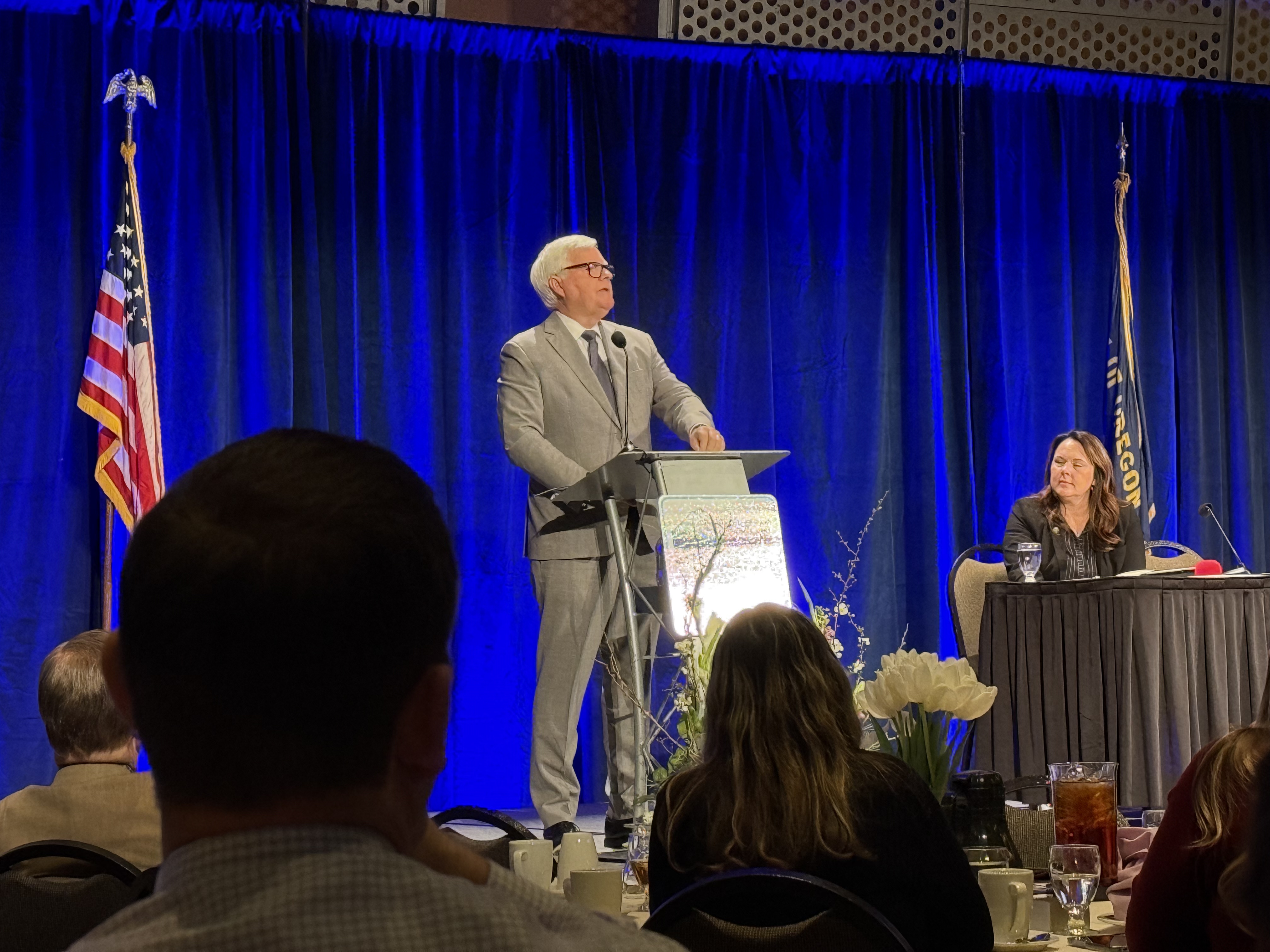
Willis delivered the most overtly political speech of the three. He focused on homelessness, drug addiction, education and what he described as state-level failures. He argued that unmanaged homeless camping has become unacceptable public policy and said local officials need stronger cooperation from the state, particularly on camps located on Oregon Department of Transportation right of way.
He also tied those concerns to a broader argument that Oregon should stop normalizing institutional decline.
“For too long, I feel like we’ve been told that the failures we’re experiencing in our community are the best that anybody can do and that we should just get used to it. That it’s normal to have failing institutions like the state hospital or the Oregon Youth Authority or the Oregon Department of Education. But none of this is true,” Willis said.
Taken together, the luncheon was less a ceremonial recap than a policy signal. Marion County leaders sought to present the county as a place willing to spend one-time money on lasting projects, expand local service models and push harder against state systems they believe are failing to keep up.